
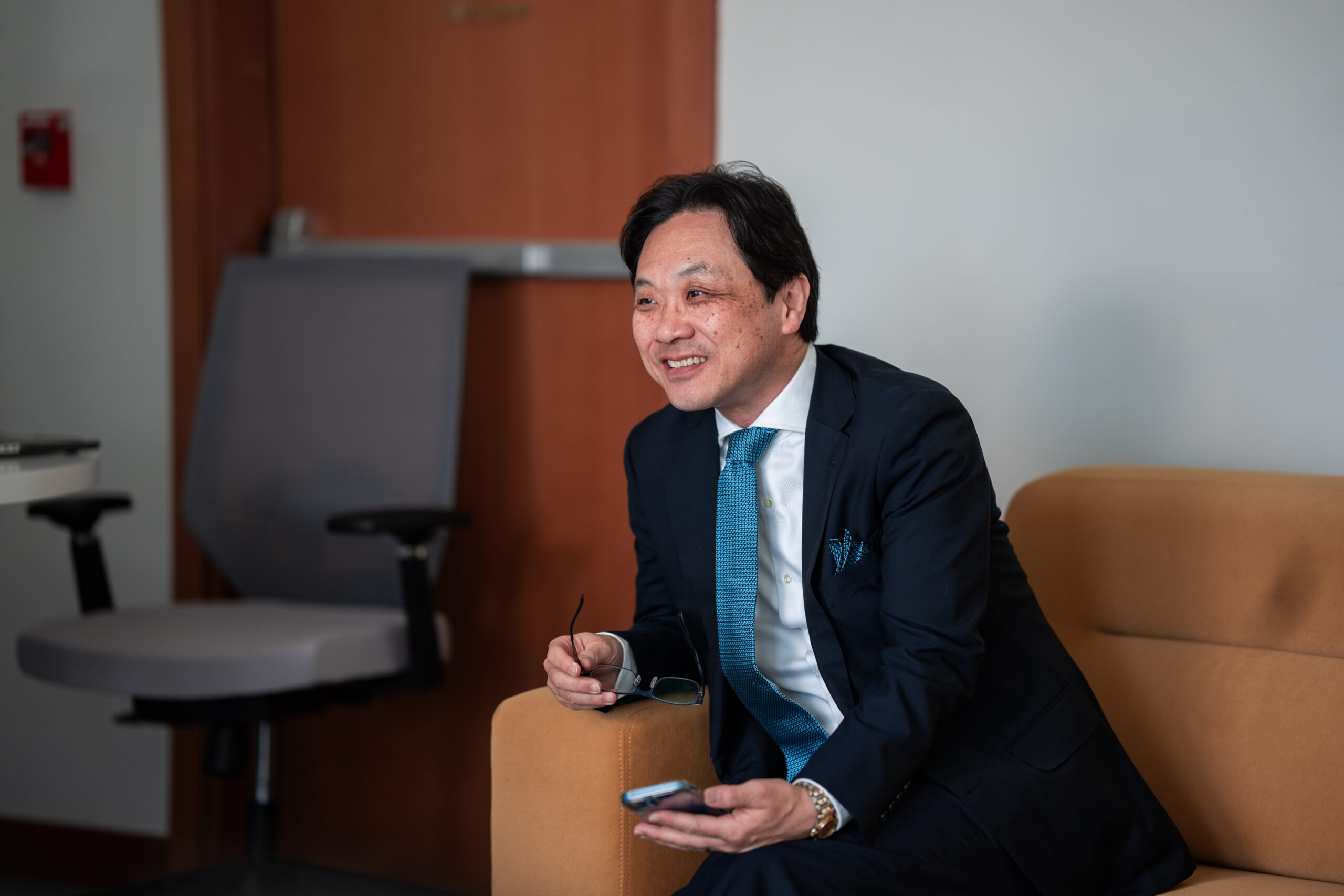
Leading Without a Map: Toru Takahashi on Kokorozashi
Toru Takahashi of GLOBIS Europe on why logic optimizes but doesn’t originate, and how executives can find the purpose that fills the gap.
In 1992, amid the fallout of Japan’s economic bubble, Yoshito Hori decided to start an independent business school. The data offered him no encouragement. Acquaintances warned that no one in Japan would attend, entrenched global institutions held decades of head start, and the domestic market was effectively zero.
Three decades later, GLOBIS has trained more than 2.3 million professionals.
For Toru Takahashi, Global Chief Strategy Officer at GLOBIS Europe, that trajectory was not steered by spreadsheets, but by a foundational Japanese principle: kokorozashi. We sat down with Takahashi to discuss why modern leadership demands more than analytical logic, how Japanese philosophy reframes productivity, and what executives must do when the map runs out.
You trace the survival and growth of GLOBIS back to a single word. How do you define kokorozashi for an international executive?
“In standard dictionaries, you will find it translated simply as ‘will’ or ‘ambition,’ but that misses the heart of it. The Japanese character for kokorozashi (志) combines two elements: the symbol for a person of aspiration (士) and the symbol for heart and mind (心). It represents a conscious balance: thinking and feeling together.
At GLOBIS, we describe it as a personal mission that blends ambition with contribution to society. In our seminars, we often summarize it as the connection between individual happiness and social happiness.
Many leaders in the West are now familiar with ikigai, but kokorozashi has a different pull. Ikigai is your reason to get up in the morning; it can be entirely personal, like tending your garden, mastering an instrument, or enjoying a quiet morning routine. Kokorozashi cannot stay private. It points outward. It is a long-term commitment to leave society in better shape than you found it.”
What is your own kokorozashi?
“My own kokorozashi is rooted in a simple belief: people can change enormously when they change their environment.
My years living and working outside Japan exposed me to different cultures, values, and ways of seeing the world. Looking at the world through multiple lenses also helped me see myself more clearly—who I am, what I value, and what I want to contribute. In that sense, crossing borders not only broadened my perspective; it strengthened my identity and elevated my kokorozashi.
I also discovered something deeply human: there is a profound joy in the moment when people who come from very different backgrounds begin to truly understand one another. Differences do not have to divide us; they can become a source of learning, connection, and growth.
That experience shaped what I want to do today: create more opportunities for people to cross boundaries, connect across differences, and discover that joy for themselves. Ultimately, I hope to contribute to a global society where more people can experience the joy of understanding one another and growing together.”
You have pointed out that logic alone would have killed GLOBIS before it started. Are you arguing that leaders should abandon analytical rigor?
“Not at all. Analytical logic is vital in business. But logic is an optimizer, not an originator. If Hori had listened only to market analysis in the nineties, he would have packed his bags. The spreadsheet said no. Kokorozashi is what allows a founder or an executive to act when data cannot yet verify the path.
We see that same tension in how organizations manage their people today. When economic pressure mounts, leadership instinctively treats staff as an operating expense to be trimmed. They assume that by reducing headcount, they can do more with less.
I advocate for what I call the ‘efficiency of inefficiency.’ Traditional efficiency was engineered for the factory floor, where every task was repetitive and every second was measured. But innovation does not follow an assembly line. Experimentation, exploration, and time for quiet reflection look like waste on a quarterly earnings report. Yet that seemingly inefficient space is often where innovation, trust, resilience, and long-term organizational capability are built.”
What practical role does this personal mission play when an organization faces deep turbulence?
“Purpose does its real work when conditions turn foggy. In stable times, managers rely on titles, organizational charts, and formal policy. But when markets shift unexpectedly, people naturally start asking what their work is for. Leaders who have defined themselves in relation to society have a steady internal compass.
It is also indispensable when leading across borders. I learned this early in my career during my first overseas posting in Iran with Marubeni. The living reality of the country was completely different from what I had absorbed through Western media. It taught me that formal authority and cultural assumptions carry very little weight abroad. When your title means nothing in a room, alignment around shared purpose and genuine humility is the only thing that works.”
In your work with European C-suites and L&D directors, you’ve observed that many leadership development programs fall flat. Why does skills training struggle to move the needle?
“Because you cannot solve a mindset problem with a skills catalog. When leadership falters, organizations often respond by adding more competency-based training. That can be useful, but it is not enough. If a leader lacks curiosity and an intrinsic sense of purpose, technical training stays on the surface. As I often say: the problem is not technology; the problem is the mindset.
A mindset does not shift through content alone. It requires guided self-reflection, honest dialogue with peers, and the courage to test new thinking in real situations. That takes deliberate time, and it requires other people.”
How does a busy executive begin to uncover their own kokorozashi?
“You do not need a strategy deck. You need to look backward.
Think back to the most agonizing decisions of your career—the moments when no path was clean and you had to choose what to sacrifice. Why did you make that choice? The decisions you made under genuine pressure reveal what you truly value.
At GLOBIS, we encourage leaders to reflect on four foundational questions:
- Examine your life story: Look past your formal resume to the detours, because an underlying pattern always connects them.
- Interrogate your roots: Where do you come from, what values shaped your upbringing, and what causes move you?
- Map the tension: Compare your personal desires, your professional duties, and society’s needs. Look closely at where they clash.
- Think in decades: Commit to developing your inner character with the same discipline you apply to your strengths.”
And remember: kokorozashi is not something you discover once and then put on a wall. It evolves as you meet new people, enter new environments, take risks, fail, and learn.
How does this philosophy translate into practice for leaders wanting structured time away from the noise?
“Self-reflection sounds straightforward on paper, but it is very difficult to do alone while managing daily fires. Leaders need an intentional environment where they can step back from the quarterly pressure and test their convictions against peers who face the same dilemmas.”
Explore kokorozashi with GLOBIS
The Kokorozashi Leadership Program from GLOBIS Corporate Solutions starts online on April 14, 2027. Five biweekly live sessions cover compassionate leadership, creating shared value, designing enduring organizations, and leading with kokorozashi. Takahashi is among the faculty. Applications close April 2, 2027. The fee is €2,300, and the program is designed for leaders with at least seven years of leadership experience.
Registration link: https://corporatesolutions.globis.com/open-enrollment-program/kokorozashi-leadership-program


