Ochugen: The Ancient Gift Ritual That Still Rules Modern Japan
Every July, millions of Japanese ship boxes of fruit, beer, and sweets across the country. The ritual is older than the post office and subtler than a holiday sale, balancing heat relief, social debt, and the quiet pleasure of a perfectly wrapped gift.
Every summer, millions of gifts travel across Japan—usually fruit, tea, or sweets. These are ochūgen, a midsummer ritual of thanks exchanged between colleagues, clients, teachers, and old friends.
These offerings often take the form of cooling delicacies—perfectly chilled melons, refreshing jellies, premium teas, or artisanal sweets designed to provide both physical comfort and psychological relief from the seasonal heat.
Behind every Ochūgen gift box lies a simple message: I see what you did for me, and I’m sending something to make your summer easier. After all, what could make a sweltering Japanese summer better than a sliced of chilled watermelon?
From sacred fires to summer commerce
The practice traces back to China’s Chūgen, a Daoist festival where families lit fires, confessed their faults, and shared gifts with neighbors to honor the Earth Official who washed sins clean. Buddhism brought this tradition to Japan, where it merged with Obon, the season for welcoming ancestral spirits. This fusion created a unique summer ritual that simultaneously cooled the living and honored the dead.
The spiritual elements faded by the seventeenth century, but the mid-seventh lunar month timing endured. Today’s regional split reflects this ancient calendar: Kantō typically delivers by July 15, Kansai by August 15, both echoing lunar rhythms in an air-conditioned age.
Gifts and gratitude
What distinguishes ochūgen from Western gift-giving conventions lies in its profound embrace of kenjōgo — the linguistic and behavioral patterns of humble respect. When presenting an ochūgen gift, the giver invariably employs the phrase “tsumaranai mono desu ga” (つまらないものですが) — literally meaning “this is a boring/worthless thing, but…”
This seemingly counterintuitive modesty reflects a sophisticated understanding of relationship dynamics. As cultural observer Inazo Nitobe noted, while Americans might say “You are wonderful, so I’m giving you this wonderful gift,” the Japanese approach declares “You are so wonderful that no gift, however good, could be wonderful enough for you.”
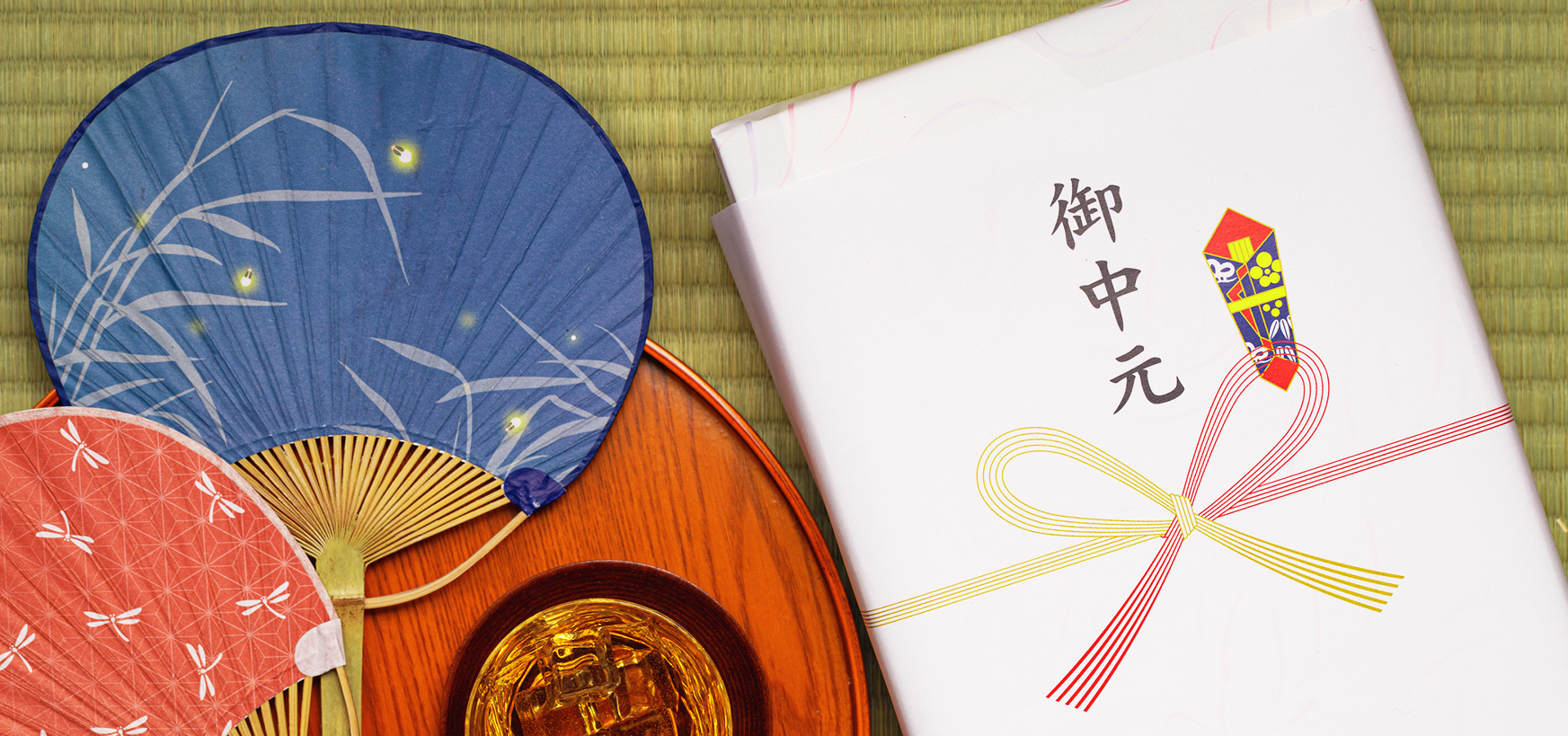
The wrapping ceremony itself becomes an exercise in aesthetic reverence. Traditional noshi (熨斗) decorative papers, featuring folded elements that symbolize good fortune and longevity, transform simple packages into ceremonial objects. The presentation method — offering gifts with both hands while maintaining appropriate posture — reinforces that the act of giving transcends mere material exchange.
Ask a Tokyo office worker why she spends ¥4,000 on a fruit jelly set for her old homeroom teacher and she will likely shrug and say, “Giri” (obligation). This might sound cold, yet in Japan it keeps the social web elastic. Gifts record debts openly, preventing them from festering into resentment. Ochūgen converts gratitude into a visible, edible form — something the recipient can acknowledge, consume, and clear until the next season.
Gifts that melt the heat
Early summer in Japan is thick and saturated. Traditional doctors spoke of “natsubate,” the listlessness brought on by humidity, and cooks answered with food that traveled cold and refreshed the palate. Melons arrive packed in straw, gelatin desserts wobble in clear glass, handmade sōmen noodles come with dipping broth meant for ice water.
Color does half the work. Department store buyers plan palettes of soft blues, silver foils, and translucent plastics that create a chill before the box is even opened. The psychology of coolness — visual, tactile, and gustatory — has become as much a part of ochūgen as the parcel itself.
Japan now moves roughly nine billion parcels a year, and for merchants, the ochūgen season can mirror the Christmas rush seen in the West. The infrastructure is also primed and ready: Couriers add refrigerated routes to ensure your cool treats are safely refrigerated throughout their journey. To stay on the safe side, however, it’s advisable to ship your gift by mid-June if you want to avoid “Black Friday”-esque rushes in July.
Joining the circle
Foreign residents often worry about missteps. The safest rule is consumability: high quality food or drink that vanishes after use. In the ¥3,000–¥5,000 range you can send craft beer to a mentor, fine green tea to a landlord, or a glossy peach duo to the family dentist. Wrap with a simple red and white noshi, write ochūgen (御中元) above your name, and include a brief thank you note.
If the delivery window has passed, mail a shochū mimai summer greeting card instead; etiquette forgives tardiness when matched with humility. Should you receive a box, open it later and send thanks quickly. No counter gift is expected until year-end Oseibo, unless the relationship is extraordinarily close.
Japan Post — the world’s third-largest postal service by volume — maintains an online ranking of the top gifts of the season, offering practical guidance for newcomers navigating the tradition. This year, mixed-fruit juice, canned peaches and shine muscat grape jelly made the top three list.
Why the custom endures
Merchants once used summer gifts to build networks and display sophistication indirectly. Today, corporations have formalized this into structured programs, with the 2024 summer gift market reaching ¥656 billion.
This investment yields tangible returns: strengthened partnerships, improved loyalty, and smoother negotiations. International firms operating in Japan have learned that mastering ochūgen can provide a competitive edge, turning cultural awareness into business advantage.
Despite these incentives, a midsummer gift should be seen as more than a transaction. It embodies the Japanese concept of “omotenashi” — hospitality that anticipates needs without expectation of return. The practice also reflects “mono no aware,” the bittersweet awareness of impermanence; gifts are meant to be consumed and forgotten, leaving only the memory of thoughtfulness.
Ochūgen thrives because it multitasks: cooling bodies during the most oppressive weeks, signaling respect up and down hierarchies, and keeping Japan’s dense logistics network humming. Its rules flex with the ages — today young adults order via smartphone, merchants promote eco-friendly furoshiki wraps — yet the practice still turns obligation into opportunity.
In a country where trains run on the dot and typhoons test the grid, that reminder, like a cold slice of melon, lands exactly when it is needed most.
Your ochugen action plan
- Cast your gratitude net wide: Send gifts to mentors, colleagues, teachers, and service providers who made your year easier. Ochūgen recognizes the web of people supporting your success.
- Prioritize thoughtfulness over expense: Choose gifts that show you understand the recipient’s preferences and the season’s needs. A well-chosen ¥3,000 cooling tea beats a generic ¥10,000 fruit basket.
- Master the presentation ritual: Use proper noshi wrapping, write legibly above your name, and deliver with both hands. These details communicate respect more powerfully than the gift’s monetary value.
- Transform relationships through strategic giving: Corporate ochūgen builds measurable business value through strengthened partnerships, improved negotiations, and enhanced client loyalty.
- Recover gracefully from timing mistakes: Send a summer greeting card with humble apologies if you miss the delivery window. Japanese culture rewards acknowledged mistakes over ignored obligations.